Jenni-Lee – The Bus is my Office
Jenni-Lee has been driving buses for around five years, most of them on school runs in Tauranga. The days start early with a pre-check at the depot and the first pick-ups before the school bell. Then there’s a pause, time to be at home with her daughters or catch up on her psychology studies, before the afternoon shift begins. For Jenni-Lee, the rhythm of the job fits well with the rhythm of her life.
“I’m a mum of three girls, and I’m also studying psychology part-time,” she says. “When I started as a bus driver, I was finishing a double major Bachelor in Education Psychology, which I’ve accomplished now. Now I’m doing my postgraduate in psychology at Massey University. So, just doing that part-time on the side. There’s a lot of transferable skills.”
“The hours mean I can still make them breakfast, do my mum thing in the morning, and be home for dinner. My girls are on the buses with me sometimes – but instead of just taking three children to school, I’m taking like up to 55 children sometimes. It’s quite neat knowing you’re actually doing a service that is actually helping the community that you live in”.
Driving has always appealed to her, but it’s the people that make the job special. Children often come up to the front of the bus to chat. “I feel like a bit of an aunty to them,” Jenni-Lee laughs. On urban runs, the mix of passengers widens. Once, after chatting with a woman who rode her bus regularly, Jenni-Lee later answered the phone in the office – and the woman recognised her voice straight away. “It was such a nice reminder that we can make an impact in people’s lives, even if we don’t realise it.”
For Jenni-Lee, the bus is her moving office. She never sits still for long, and the view is always changing. Pilot Bay at sunrise is one of her favourite sights. “It’s so beautiful that I once stopped to take a photo. I forgot there was still a passenger sitting quietly at the back. Luckily, he didn’t mind,” she grins.
At home, her role as a mum and as a driver overlap. She teaches her girls the same lessons she hopes all passengers take on board: say Kia ora, be polite, give up your seat if someone else needs it, and always thank the driver. “After five years, a lot of drivers know my kids,” she says. “So if they muck around, I hear about it.” She notices that older students, often tired at the end of the day, are among the best at showing appreciation. Their quiet “Thanks, driver” goes further than they might realise.
Not every moment on the job is smooth. On one late urban shift, a passenger tried to sprint up and grab what he thought was a cash box. It was empty, but the attempt stayed with her. But the good moments always outweigh the hard ones – a compliment about her driving, a teenager who notices her pink scarf, or an old school bus passenger stopping her years later just to say how well life is going.
“Those are the things that remind me this is more than just a job,” she says.
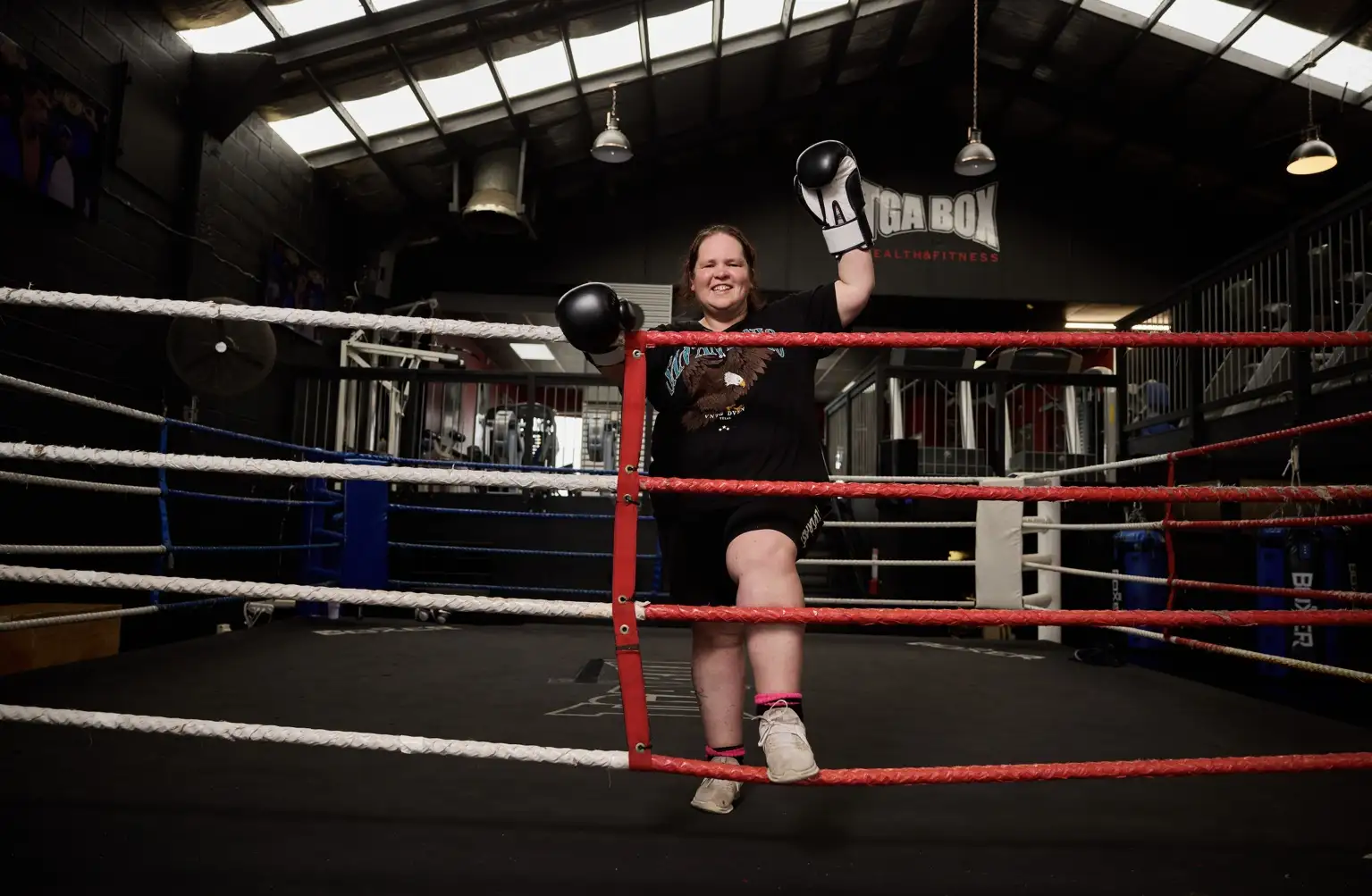
Outside of work, Jenni-Lee has found other passions. She boxes, having fought in two corporate bouts, and her friends call her the “smiling assassin.” “It took me a while to throw that first punch – I’m a nice person! But once you’re in the ring, you find your strength.” Boxing gives her confidence, a way to release stress, and a sense of empowerment she carries into every part of life. Study also plays a big part. “The psychology skills I’m learning show up on the bus all the time. Neurodiverse kids, I find, often gravitate toward me. I do my best to make the ride safe and comfortable for them.”
What keeps her in the driver’s seat isn’t just the driving – it’s the community. At the depot, she feels part of a family of drivers, many with advice and stories she leans on. Out on the road, she knows her job is about more than timetables and stops. It’s about moving people to school, to work, to wherever they need to be, and reminding them along the way that kindness matters.
As Jenni-Lee puts it: “If a passenger says thank you when they step off, I know I’ve done my job well. They feel safe, they’re happy, and that makes me feel good too.”
Thanks Driver is a project with a simple purpose: to remind us that buses aren’t just about timetables and routes, but about the people – behind the wheel and in every seat -each with their own story to share. A bus is a unique shared space, and small gestures – whether a nod or a smile between passengers, or the simple words “thanks, driver” – can make all the difference.